Solar Water Heater Repair in Dubai
TL;DR
- Maintenance is Vital: Dubai’s extreme heat and dust can reduce efficiency by up to 30%, making regular panel cleaning and system descaling essential to prevent blockages and hardware failure.
- Key Components: Proper upkeep focuses on the “brain” (electronic controllers) and “heart” (circulation pumps) of the system, alongside structural audits of roof mounts to withstand seasonal high winds.
- Proactive Troubleshooting: Homeowners can avoid costly repairs by monitoring for discolored water, unusual noises, or electrical trips, and by replacing sacrificial anode rods every two years to prevent tank corrosion.
- Cost and Service: Standard repairs in Dubai typically range from 300 AED depending on complexity, with professional inspections extending the system’s lifespan to 12, 15 years.
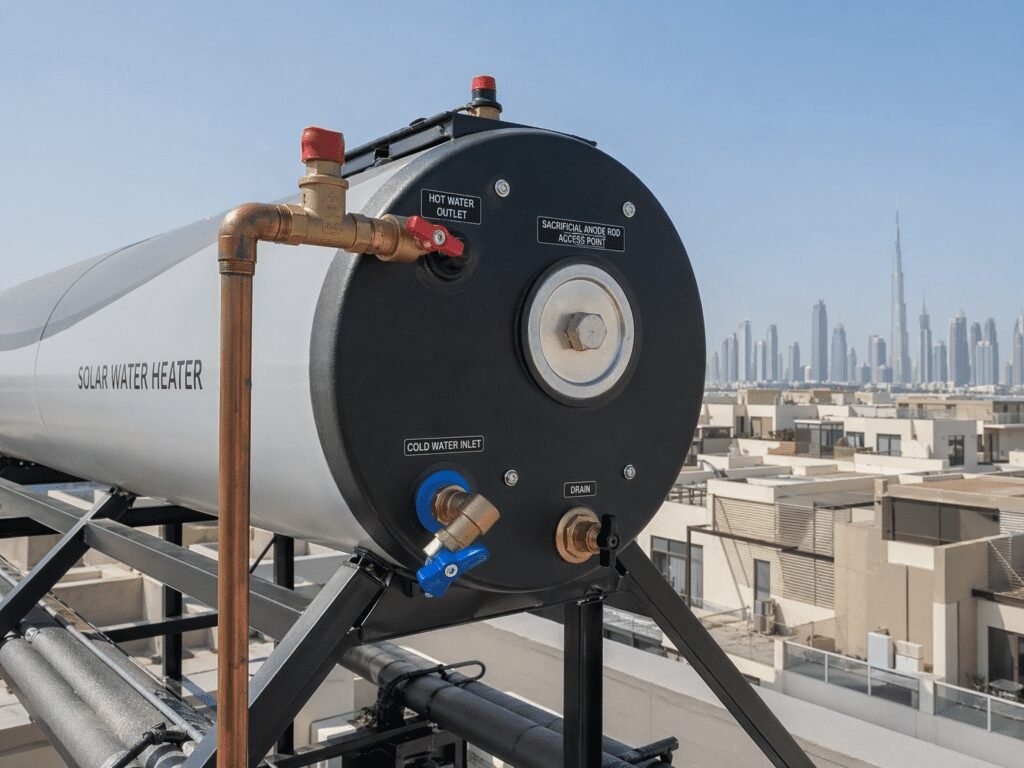
Table of Contents
- 1. Common Causes of Solar Heater Failure in the UAE
- 2. Inspection and Performance Evaluation
- 3. Cleaning and Descaling of Components
- 4. Pump and Controller Maintenance
- 5. Support Structure and Roof Penetrations
- 6. Leak Detection and Repair
- 7. Troubleshooting Steps for Homeowners
- 8. Estimated Costs and Repair Time in Dubai
- 9. Frequently Asked Questions
- Summary of Solar Maintenance Benefits
- 10. Identifying Common Solar Water Heater Issues in Dubai
- 17. Professional Inspection and Performance Evaluation
- 22. Solar Panel Cleaning and System Descaling
- 23. Pump Maintenance and Controller Calibration
- 24. Leak Detection and Structural Integrity
- 25. Common Symptoms and Troubleshooting
- 26. Summary of Solar Maintenance Benefits
- 27. Pump and Controller Maintenance in Dubai
- 29. Leak Detection and Support Structure Checks
- 30. Troubleshooting and Repair Costs in Dubai
- 32. Summary of Key Benefits
- 33. Support Structure and Leak Detection in Dubai
- 34. Common Solar Water Heater Problems and Symptoms
- 35. Troubleshooting and Simple Maintenance Steps
- 36. Repair Costs and Timeframes in Dubai
- 37. Solar Water Heater Repair FAQ
- 38. Summary of Solar Repair Essentials
- 39. Repair Costs and Service Timeline
- 40. Expert Inspection and Performance Evaluation
- 41. Panel Cleaning and Descaling for Maximum Efficiency
- 43. Support Structure and Leak Detection
- 45. Summary of Solar Water Heater Repair
- 60. Solar Collector Maintenance and Cleaning
- 61. Pump Repair and Controller Maintenance
- 62. Support Structure and Racking System Checks
- 63. Leak Detection and Pressure Relief Valve Inspection
- Frequently Asked Questions about Solar Repair in Dubai
Living in Dubai offers the perfect climate for renewable energy, but even the most robust solar systems face challenges from extreme heat and dust. When your hot water supply fails, it disrupts everything from morning routines to household cleaning. Understanding how to manage solar water heater repair in Dubai ensures your system remains efficient and your utility bills stay low.
Common Causes of Solar Heater Failure in the UAE
Environmental Wear
Definition: The degradation of thermal collectors due to prolonged exposure to UV radiation and airborne particulates.
Benefit: Mitigating environmental wear prevents the solar fluid from overheating and protects the integrity of the glass casing.
Example: Scheduling monthly dust removal ensures that the photovoltaic or thermal surface maintains maximum heat absorption, preventing a gradual decline in energy conversion.
Mechanical Maintenance
Definition: The upkeep of moving parts and pressure-regulating components, such as circulation pumps and safety valves.
Benefit: Regular servicing prevents mineral scaling, a common issue in Dubai Hills, which can lead to internal blockages and tank ruptures.
Example: Contacting EmirateFix Center (0581781705) for specialized field repairs allows for the early detection of faulty pressure relief valves before they cause system-wide leaks.
Summary: Protect your system from environmental stressors and mechanical fatigue to avoid the high costs associated with full-scale restorations.
Inspection and Performance Evaluation
Beyond identifying visible wear, a professional evaluation serves as a diagnostic roadmap to ensure every component operates within its original manufacturer specifications.
Performance Evaluations
Definition: A data-driven analysis of the temperature differential between the collector inlet and the storage tank.
Benefit: This process identifies “silent” failures, such as micro-cracks in the glazing or unexpected shading from maturing landscapes in areas like The Meadows.
Example: A technician using thermal imaging can spot stagnant fluid pockets that indicate a localized blockage within the riser pipes.
Proactive Inspections
Definition: Scheduled assessments of structural attachments and roof penetrations to ensure the system remains secure against high winds.
Benefit: Catching loose mounting brackets early prevents vibration damage, which can extend the equipment’s operational lifespan by several years.
Example: Verifying the integrity of waterproof seals during an inspection prevents moisture ingress into the building’s ceiling, saving thousands in secondary repair costs.
Professional Standards
Definition: Adherence to international solar thermal benchmarks during technical auditing.
Benefit: Utilizing EmirateFix Center ensures that your technical assessment follows rigorous safety protocols, guaranteeing your system operates at peak capacity.
Summary: Comprehensive professional inspections serve as a preventative measure to maximize energy output and ensure structural safety.
Cleaning and Descaling of Components
While inspections identify potential issues, the physical cleaning and chemical descaling of the system are what restore its actual thermal performance to factory levels.
Regular Panel Cleaning
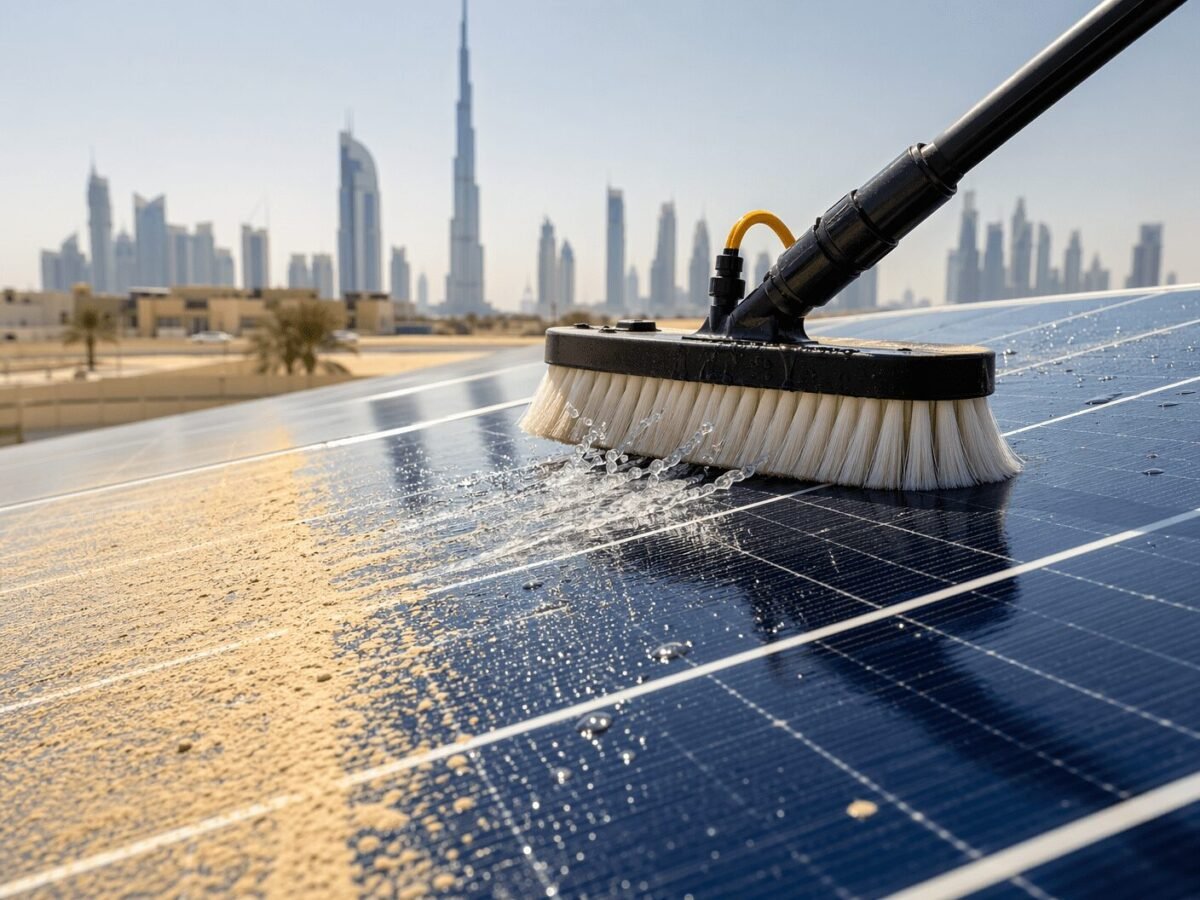
Definition: The removal of “soiling”, a layer of fine sand and pollutants that creates an opaque barrier over the solar cells.
Benefit: Routine cleaning can restore energy absorption by up to 30%, ensuring your water reaches the desired temperature even during the shorter winter days.
Example: Using deionized water for panel wipes prevents the streaks and mineral spots that tap water often leaves behind in the Dubai climate.
Professional Descaling
Definition: The application of food-grade acidic solutions to dissolve calcium and magnesium deposits inside the heat exchanger.
Benefit: Descaling water tanks, especially in high-performance Ariston units, improves heat transfer efficiency and protects the internal heating elements from burning out.
Example: Flushing the tank every 12 to 18 months prevents the “rumbling” noise often heard in GRP tanks located in Palm Jumeirah villas.
System Longevity
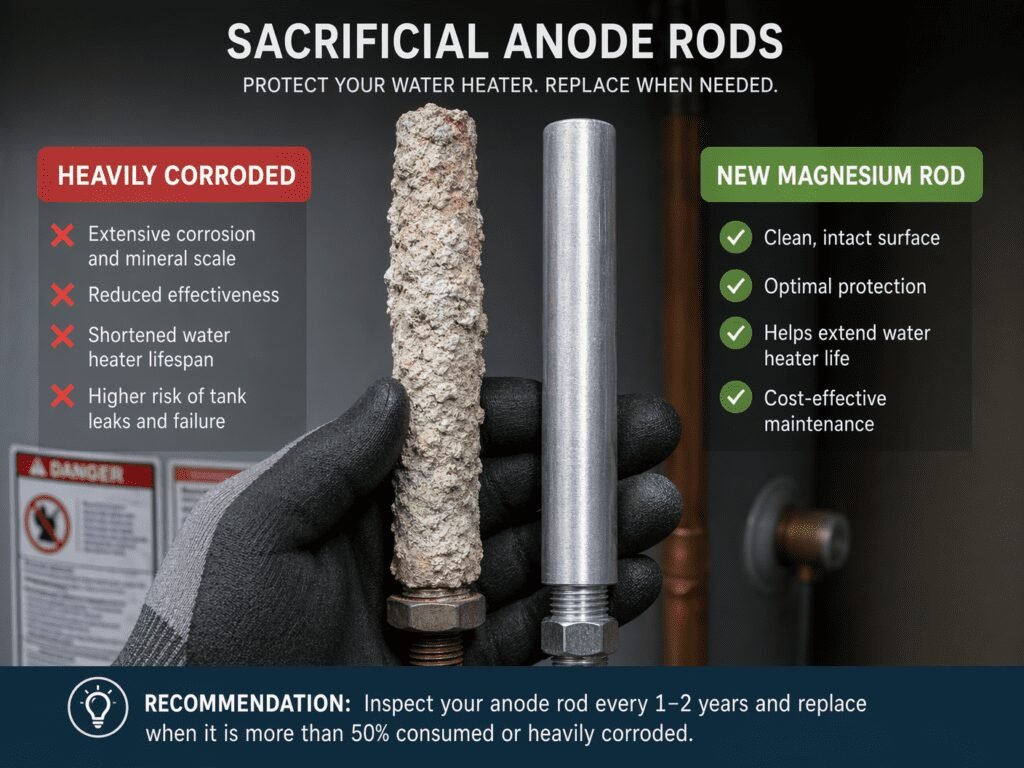
Definition: The preservation of auxiliary components, including thermostats and sacrificial anodes, through chemical balance.
Benefit: Maintaining a clean internal environment prevents the premature corrosion of the tank lining, which is the leading cause of non-repairable solar heater failures.
Summary: Consistent cleaning and descaling are essential to maintaining the thermal conductivity required for a reliable hot water supply.
Pump and Controller Maintenance
Once the collectors and tanks are optimized, the focus must shift to the “brain” and “heart” of the system: the electronic controller and the circulation pump.
Solar Pump Maintenance
Definition: The lubrication and electrical testing of the motor responsible for moving water between the roof and the taps.
Benefit: Maintaining the pump ensures consistent water pressure throughout the home; a failing pump often displays a 25% drop in flow rate before failing completely.
Example: Addressing grinding noises early can result in a simple bearing replacement rather than a full motor swap, significantly reducing repair bills.
Sensor and Controller Calibration
Definition: The synchronization of thermal sensors with the digital interface to manage heating cycles effectively.
Benefit: Precise calibration prevents “short-cycling,” where the system turns on and off too frequently, which wastes electricity and wears out the internal relays.
Example: Professional testing of the glycol levels and sensor accuracy ensures that the fluid remains stable, preventing the pipe linings from warping under extreme summer heat.
Automated System Protection
Definition: Configuring the controller’s “holiday mode” or “overheat protection” settings to manage stagnation during periods of low use.
Benefit: This prevents the water from reaching boiling temperatures, which protects the valves and seals from thermal stress.
Summary: Expert pump maintenance and sensor calibration provide the final layer of protection needed to prevent total system shutdowns.
Support Structure and Roof Penetrations
Structural Integrity Assessments
Definition: A comprehensive evaluation of the mounting hardware and racking systems that secure collectors to the roof.
Benefit: These checks prevent mechanical fatigue caused by high-velocity wind gusts common in open areas like Mudon.
Example: Tightening vibration-loosened bolts prevents the collectors from shifting, which protects the integrity of the pipe connections.
Waterproofing and Sealant Audits
Definition: The inspection of flashing and chemical sealants at points where piping enters the building envelope.
Benefit: Proactive resealing counters the rapid degradation of UV-sensitive materials in the UAE climate.
Example: Replacing cracked silicone around roof penetrations prevents moisture from seeping into the ceiling substrate during rare but heavy rainstorms.
Summary: Maintaining the physical foundation of the system ensures that environmental stressors do not translate into structural home damage.
Leak Detection and Repair
Building on structural safety, the next priority is the containment of the pressurized water system itself.
Joint and Panel Integrity
Definition: Systematic monitoring of GRP (Glass Reinforced Plastic) panel joints and thermal expansion loops.
Benefit: Identifying micro-fissures early can extend the lifespan of the storage unit by up to five years.
Example: Technicians in Dubai Hills Estate often find that moisture near the tank base indicates a failing gasket rather than a compromised tank wall.
Closed-Loop Pressure Monitoring
Definition: Tracking the stability of the internal fluid pressure within the solar collectors.
Benefit: Rapid detection of pressure drops prevents the circulation pump from running dry, which avoids motor burnout.
Example: A fluctuating gauge often points to a faulty air vent or a pinhole leak in the copper manifold that requires immediate soldering.
Summary: Consistent leak oversight transitions the system from reactive troubleshooting to a proactive preservation model.
Troubleshooting Steps for Homeowners
While professional leak detection is vital, homeowners can perform basic diagnostics to streamline the repair process.
Electrical and Surface Verification
Definition: Confirming the status of the dedicated solar circuit breaker and the physical clarity of the glass surface.
Benefit: This eliminates “false alarms” where the system is functional but simply lacks power or solar exposure.
Example: After a regional dust storm, a simple rinse of the collectors can restore water temperature by removing the silt layer that blocks UV absorption.
Visual Component Audits
Definition: A non-invasive walk-around to check for visible error codes on the digital controller or signs of discharge from the P&T valve.
Benefit: Providing these specific observations to a technician allows for more accurate remote triaging and faster on-site resolution.
Example: Noting a “Zero” reading on the pressure gauge helps the service team bring the correct replacement valves before they even arrive at the property.
Summary: Preliminary owner checks reduce downtime and help technicians arrive better prepared for the specific failure point.
Estimated Costs and Repair Time in Dubai
Understanding the financial and time requirements for these services helps residents plan their maintenance budgets effectively. For 2025, minor interventions such as sensor recalibration, thermostat adjustment, or professional panel cleaning typically range from 350 AED to 750 AED. More intensive labor, including circulating pump overhauls or the replacement of specialized GRP panels, generally falls between 1,300 AED and 2,600 AED. Most standard repair visits in high-density residential zones are completed within a 2 to 4-hour window, ensuring that hot water service is restored by evening.
Frequently Asked Questions
Optimal Cleaning Frequency
Maintaining a quarterly schedule ensures that the glass surface remains transparent to UV rays. Removing the fine Saharan dust common in the UAE prevents the “shading effect,” which can otherwise obstruct heat transfer by nearly a third.
Troubleshooting Nighttime Temperature Drops
A lack of hot water after sunset typically indicates a failure in the back-up heating element or a malfunctioning thermostat. In modern pressurized systems, this can also be caused by a depleted anode rod leading to rapid heat dissipation through the tank walls.
Determining the Repair Threshold
Minor issues like valve seepage or sensor calibration should be repaired immediately. However, if a glass-lined tank develops a structural crack or significant internal scaling, replacement is more cost-effective. High-quality European brands like Ariston or Milano are engineered to provide reliable service for over a decade when serviced annually.
Summary: Proactive troubleshooting and understanding your system’s components are the first steps toward ensuring year-round hot water availability.
Summary of Solar Maintenance Benefits
Thermal Optimization
Restoring the integrity of the thermal fluid and cleaning the collector surface maximizes heat gain. This process ensures the water reaches the target temperature faster, even during the shorter daylight hours of the winter months.
Structural Integrity
Preventative care focuses on the heavy-duty mounting frames and the integrity of the storage vessel. By managing electrolysis and oxidation, you can effectively double the operational life of the unit compared to neglected systems.
Financial Risk Mitigation
Identifying hairline fractures in piping or minor pressure fluctuations prevents catastrophic failures. Addressing these small anomalies early reduces the likelihood of emergency call-out fees and prevents secondary water damage to your property’s roof.
Contact EmirateFix: Call 0581781705 or email info@emiratefix.com. Book your professional Dubai solar heater repair today.
Identifying Common Solar Water Heater Issues in Dubai
Symptoms of System Failure
Beyond the loss of heat, homeowners should watch for discolored water or vibrations coming from the plumbing lines. These are primary indicators of sediment buildup or air pockets within the closed-loop system. For instance, residents in areas like Dubai Hills often report these symptoms after heavy sandstorms.
Diagnostic Performance Evaluation
Technicians utilize thermal imaging to detect “cold spots” in solar collectors. These evaluations identify internal blockages that are invisible to the naked eye. The EmirateFix Center (0581781705) uses these diagnostics to pinpoint exactly where heat transfer is failing before starting any labor.
Mineral Management and Descaling
The UAE’s water profile can lead to heavy calcification within the heat exchanger. Descaling involves using food-grade acids to dissolve mineral deposits, which restores the diameter of internal copper piping and improves flow rates in high-mineral zones like Sharjah.
Electronic Controller Calibration
The differential controller acts as the brain of the system, managing the temperature gap between the roof and the tank. If the sensors are misaligned, the pump may run unnecessarily, leading to premature motor burnout. Proper calibration is essential for communities like Tilal Al Ghaf where energy efficiency is a priority.
Racking and Fastener Inspection
High winds in the UAE can loosen the aluminum racking systems over time. Technicians check every bolt and seal to ensure the panels remain secure. This stability is vital for preventing the micro-movements that eventually lead to pipe fatigue and expensive refrigerant or water leaks.
Summary: A comprehensive diagnostic approach ensures that every mechanical and structural component is prepared to withstand the harsh local climate.
Professional Inspection and Performance Evaluation
Advanced Collector Rejuvenation
While basic cleaning is essential, professional rejuvenation involves checking the vacuum seal of the tubes or the integrity of the flat-plate glazing. This ensures that the specialized coating on the absorber plate is not peeling, which is critical for brands like Ariston to maintain their high-performance ratings.
Fluid Dynamics and Pump Synchronization
The circulation pump must be synchronized with the thermal load of the day. Maintenance includes checking the capacitor and the impeller for wear. Ensuring the pump operates at the correct RPM prevents the glycol or water from boiling within the collectors during the peak of a Dubai summer.
Gasket and Seal Integrity Checks
Over time, the rubber gaskets and EPDM seals used in solar installations can become brittle due to intense UV exposure. Professional inspections focus on replacing these small but vital components before they fail, protecting the roof structure from slow, hidden leaks that can compromise the building’s insulation.
Summary: Specialized technical inspections go beyond surface-level cleaning to ensure the internal hydraulics and electronics are operating at peak safety standards.
Solar Panel Cleaning and System Descaling
Regular Panel Cleaning
Atmospheric dust and fine sand particles can reduce solar absorption efficiency by up to 30% in arid environments. Maintaining clear glass surfaces ensures the photovoltaic or thermal cells receive maximum irradiance, directly lowering backup electrical costs. For example, properties in wind-prone areas like Mudon benefit from a bi-weekly rinsing schedule to prevent abrasive sand etching.
Professional Descaling
Dubai’s water mineral content often leads to calcium carbonate crystallization within the internal copper headers. Descaling involves circulating food-grade solvents through the manifold to dissolve these blockages, restoring original flow rates and heat transfer speeds. Residents in Al Furjan, where water hardness can fluctuate, should prioritize an annual chemical flush to avoid pipe bursting due to pressure buildup.
Summary: Removing external debris and internal mineral deposits ensures the system operates at its engineered thermal capacity while preventing premature pipe degradation.
Pump Maintenance and Controller Calibration
Dynamic Pump Testing
Building on the hydraulic health established through descaling, the circulation pump must be audited for mechanical friction and bearing wear. Technicians monitor the amperage draw to ensure the motor isn’t overworking, which is critical for surviving the 50°C+ ambient temperatures of a UAE summer. A well-maintained pump prevents the stagnation of fluid that leads to localized boiling.
Thermal Differential Accuracy
Electronic controllers rely on precise data from the tank and collector sensors to manage flow. Even a 2-degree calibration error can result in the pump running unnecessarily or failing to activate during peak sun hours. EmirateFix Center specialists use infrared thermometers to verify that digital readouts match actual pipe temperatures, ensuring the pump only consumes energy when heat gain is possible.
Expansion Vessel Pressurization
The expansion tank acts as a shock absorber for the system’s fluctuating pressure. During a standard maintenance visit, checking the pre-charge pressure of this vessel prevents “water hammer” effects that can rattle pipes and loosen fittings. This proactive step safeguards the pump’s mechanical seals from sudden pressure spikes.
Summary: Precision calibration and mechanical audits prevent the electrical components from failing under the strain of Dubai’s extreme seasonal transitions.
Leak Detection and Structural Integrity
Ultrasonic Leak Localization
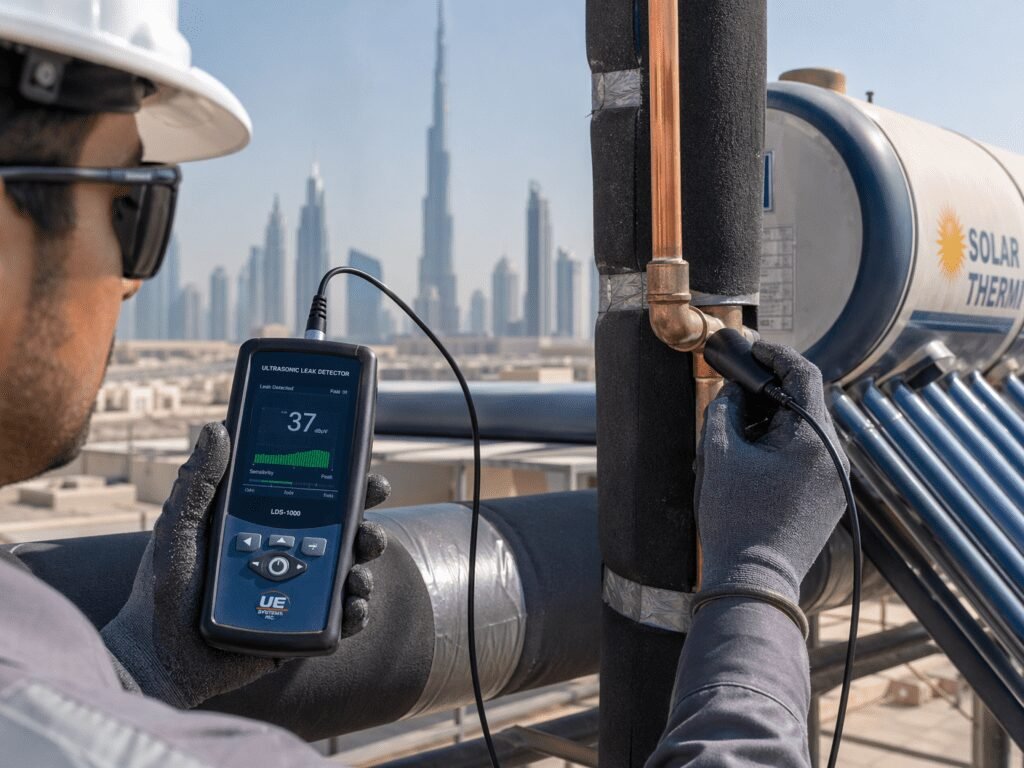
While pump efficiency is vital, even a pinhole leak can compromise the vacuum or pressure required for optimal heat transfer. Using ultrasonic detectors, technicians can identify the high-frequency hiss of escaping fluid long before water stains appear on the ceiling. Early intervention can save significantly on structural restoration costs by protecting the roof’s waterproofing membrane.
Fastener and Gasket Audits
The intense UV radiation in the UAE causes rubber gaskets and silicone sealants to become brittle over time. Annual inspections focus on replacing these perishable seals and tightening the stainless-steel mounting bolts that secure the frame. This ensures the heavy glass collectors remain stable during the high-velocity “Shamal” winds common in coastal communities.
Sacrificial Anode Replacement
To protect the inner steel tank from electrolysis and corrosion, a magnesium anode rod must be inspected. Replacing a depleted anode is a low-cost preventive measure that extends the life of the water heater by several years, particularly in high-salinity areas like The Springs or Jumeirah Islands.
Summary: Routine structural and seal audits transform the system from a potential liability into a durable, long-term asset for the property.
Common Symptoms and Troubleshooting
System Logic Reset
If you experience a sudden lack of hot water, the issue may be a software hang-up rather than a hardware failure. Powering down the system at the main isolator for 60 seconds can clear “Ghost Errors” in the controller’s memory. This simple reboot often re-establishes the connection between the roof sensors and the heating element.
Collector Shading Analysis
Performance drops are sometimes caused by external environmental changes rather than internal faults. Inspect the area around your panels for new tree growth or neighboring construction that may cast shadows during peak hours. Even partial shading on a single panel can significantly drop the output of the entire array.
Professional Field Diagnostics
When basic troubleshooting fails to restore heat, a comprehensive diagnostic is required to check for burnt-out immersion heaters or faulty check valves. Most specialized repairs in Dubai are completed within a 2, 4 hour window. For expert assistance, contact info@emiratefix.com to schedule a technician who can perform a full pressure test and electrical safety sweep.
Summary: While many minor issues can be resolved with a system reset, persistent temperature fluctuations require professional tools to diagnose the underlying hydraulic or electrical cause.
Summary of Solar Maintenance Benefits
- Efficiency: Professional cleaning removes Dubai’s fine desert dust, restoring up to 30% of the system’s original heating capacity.
- Longevity: System descaling eliminates mineral buildup, preventing internal tank corrosion and catastrophic pipe blockages.
- Cost Savings: Early leak detection through thermal imaging reduces emergency repair bills by nearly half compared to reactive fixes.
- Safety: Routine testing of the pressure relief valve ensures the system can vent excess heat, preventing dangerous tank bursts.
Ready to restore your hot water? Book your service with EmirateFix Center today by calling 0581781705 or emailing info@emiratefix.com for expert solar water heater repair in Dubai.
Pump and Controller Maintenance in Dubai
Beyond the panels, the “heart” of your system requires specialized attention to ensure the fluid circulation remains consistent and cost-effective.
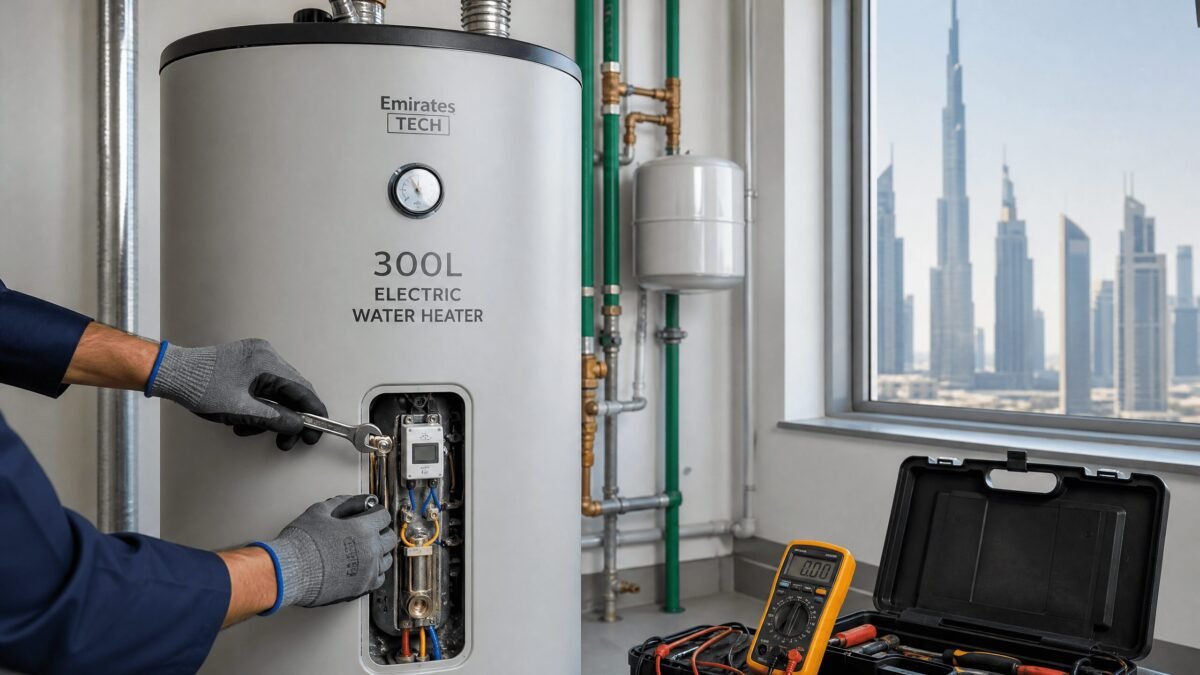
Check the Pump
Listen for grinding noises or excessive vibrations, which indicate bearing wear or air bubbles in the line. A failing pump struggles to circulate water, which can drop overall thermal transfer efficiency by 25% and leave your water lukewarm.
Calibrate the Controller
Technicians verify that the digital sensors correctly trigger the backup heating element only when necessary. Precise calibration prevents the motor from running during peak daylight hours, significantly lowering DEWA bills for residents in high-consumption communities like Dubai Hills.
Summary: Syncing the mechanical pump with the electronic controller prevents system overheating and unnecessary electricity consumption.
Leak Detection and Support Structure Checks
The final stage of a comprehensive service involves securing the physical integrity of the installation to protect your property from water damage and structural hazards.
Advanced Leak Detection
Technicians inspect every manifold joint and roof penetration point for signs of moisture or salt crystallization. Catching a pinhole leak in the solar loop prevents water from seeping into the villa’s ceiling, which typically saves homeowners thousands in secondary masonry and painting repairs.
Structural Integrity Audits
The high-salinity air in coastal Dubai can corrode even galvanized steel over time. We examine all racking, bolts, and mounting brackets to ensure they can withstand seasonal wind loads. This is particularly critical for heavy-duty Ariston solar units or large-capacity GRP tanks that exert significant weight on the roof frame.
Summary: Verifying the structural and hydraulic seals of your system mitigates the risk of catastrophic failure and extends the life of your roof.
Troubleshooting and Repair Costs in Dubai
Preliminary System Diagnostics
Perform a visual inspection of the controller display and circuit breaker before calling a technician. System “lockouts” are often caused by electrical surges rather than hardware failure. For example, resetting the isolation switch can sometimes restore functionality to a non-responsive pump.
Local Market Pricing for Components
Budgeting for repairs in the UAE typically ranges from 200 AED to 1,500 AED. While a simple thermostat recalibration falls on the lower end, replacing a high-pressure circulation pump represents a larger investment. Most standard component replacements are completed within a single site visit.
Summary: Accurate initial diagnostics prevent unnecessary part replacements and keep maintenance budgets predictable.
Summary of Key Benefits
Operational Cost Mitigation
Professional oversight eliminates the “efficiency drift” that typically plagues unmaintained units. By ensuring the differential controller is calibrated correctly, you prevent the backup electric heater from engaging unnecessarily, which can lower monthly utility bills by up to 30%.
Rapid Response Restoration
Accessing specialized repair teams ensures that complex issues, such as airlocks in the manifold or faulty expansion vessels, are resolved without risking the tank’s internal lining. This rapid intervention is vital for maintaining consistent hot water delivery in high-occupancy villas.
Summary:
Contact EmirateFix Center at 0581781705 or info@emiratefix.com for expert solar repairs today.
Support Structure and Leak Detection in Dubai
Mechanical Fastener Stability
Verify the torque of all mounting hardware to counteract the effects of thermal cycling. The constant expansion and contraction of metal frames in the desert sun can lead to “bolt creep,” which compromises the unit’s stability. For example, reinforcing the struts on a 300-liter Ariston system prevents localized stress fractures on the roof tiles.
Ultrasonic Leak Localization
Utilize acoustic sensors to find pinhole leaks within the insulated piping network. Detecting moisture egress early prevents the saturation of roof insulation, which can lose its R-value if exposed to water. Residents in communities like DAMAC Hills benefit from these non-invasive tests to protect high-end interior finishes from water ingress.
Summary: Routine structural audits and precision leak detection safeguard both your solar hardware and the underlying property infrastructure.
Common Solar Water Heater Problems and Symptoms
Temperature Fluctuations and Pressure Drops
Inconsistent heat or a sudden decrease in flow often signals mineral blockages or air pockets within the circulation loop. Identifying these shifts early prevents the circulation pump from burning out under strain. For example, a lukewarm shower during peak sunlight hours typically points to a compromised heat transfer fluid or a malfunctioning sensor.
Discolored Water or Metallic Odors
Rusty or cloudy water is a primary indicator of internal tank oxidation or a depleted sacrificial anode rod. Replacing the anode rod every two years neutralizes corrosive elements, preserving the integrity of the storage vessel. Residents often notice a distinct metallic scent when the tank’s internal lining begins to degrade.
Unusual Mechanical Noises
Knocking or grinding sounds usually emanate from calcified heating elements or failing pump bearings. These audible warnings serve as a precursor to total component failure, especially during high-demand periods. Addressing these sounds immediately can save the cost of a full motor replacement.
Summary: Recognizing changes in water clarity, pressure, and acoustics allows homeowners to intervene before minor glitches escalate into hardware failure.
Troubleshooting and Simple Maintenance Steps
Visual Inspection of Collector Glazing
Building on the symptoms of heat loss, homeowners should regularly check for physical obstructions like bird nesting or cracked glass. Restoring the physical integrity of the panel ensures maximum ultraviolet absorption. For instance, clearing shaded areas around the roof prevents “cold spots” that diminish overall thermal gain.
Verification of Electrical Continuity
If the system fails to provide hot water during overcast days, the issue may reside in the auxiliary heating circuit. Checking the dedicated solar breaker in the DB box confirms if the problem is a simple electrical trip rather than a complex plumbing leak. This step differentiates between a solar collection issue and a backup power failure.
Expansion Vessel and Pressure Checks
Monitoring the pressure gauge ensures the system operates within the standard 1.5 to 3 bar range. A stabilized pressure level prevents the safety relief valves from discharging unnecessarily, which can lead to water wastage. Regularly observing the gauge helps maintain the delicate balance between the solar loop and the domestic supply.
Summary: Preliminary diagnostic steps like checking breakers and gauges can often bypass the need for an emergency call-out.
Repair Costs and Timeframes in Dubai
Component Replacement and Calibration
Standard repairs, such as replacing a faulty thermostat, heating element, or non-return valve, typically range from 300 to 600 AED. These interventions are usually completed within 90 minutes, providing an immediate fix for temperature regulation issues. This investment is significantly lower than the cost of the water wasted by a leaking valve.
Structural and Hydraulic Overhauls
More intensive labor, including GRP tank patching or circulation pump replacement, can cost between 800 and 2,500 AED. These services often include deep system descaling, which removes the stubborn calcium deposits common in the region’s water supply. Professional re-commissioning ensures the system meets local DEWA safety standards for pressurized vessels.
Summary: Transparent pricing for parts and labor helps Dubai residents budget for essential upkeep while avoiding the high costs of complete system replacement.
Solar Water Heater Repair FAQ
How does environmental debris affect performance?
Accumulated desert sand and fine dust act as an unintended insulation layer, reflecting sunlight away from the tubes. Regular rinsing every eight weeks can improve thermal absorption by up to 25% compared to neglected panels. A simple low-pressure wash is often enough to maintain peak heat transfer.
Why is tank insulation vital in the local climate?
While the sun provides ample heat during the day, thermal retention is key for early morning usage. If the tank jacket is compromised, water temperatures can drop by over 15 degrees Celsius overnight. Ensuring the outer casing is airtight prevents the backup heater from running excessively, lowering monthly utility bills.
What is the expected lifespan after a professional refurbishment?
A well-maintained solar water heater in the UAE can last 12 to 15 years. Annual preventative maintenance, which includes flushing the system and checking the controller settings, can extend the operational life of the hardware by nearly a decade. This proactive approach ensures the system remains a sustainable asset rather than a recurring liability.
Summary: Combining routine cleaning with professional annual audits maximizes the ROI of your solar investment and ensures consistent hot water delivery.
Summary of Solar Repair Essentials
Structural Integrity & Seal Checks
Identify hairline fractures in the collector glazing and deteriorating rubber seals to prevent moisture ingress. Maintaining a vacuum-tight environment ensures the heat transfer fluid remains at optimal temperatures. For example, replacing a worn gasket early prevents the entire manifold from corroding.
Fluid Dynamics & Pressure Balance
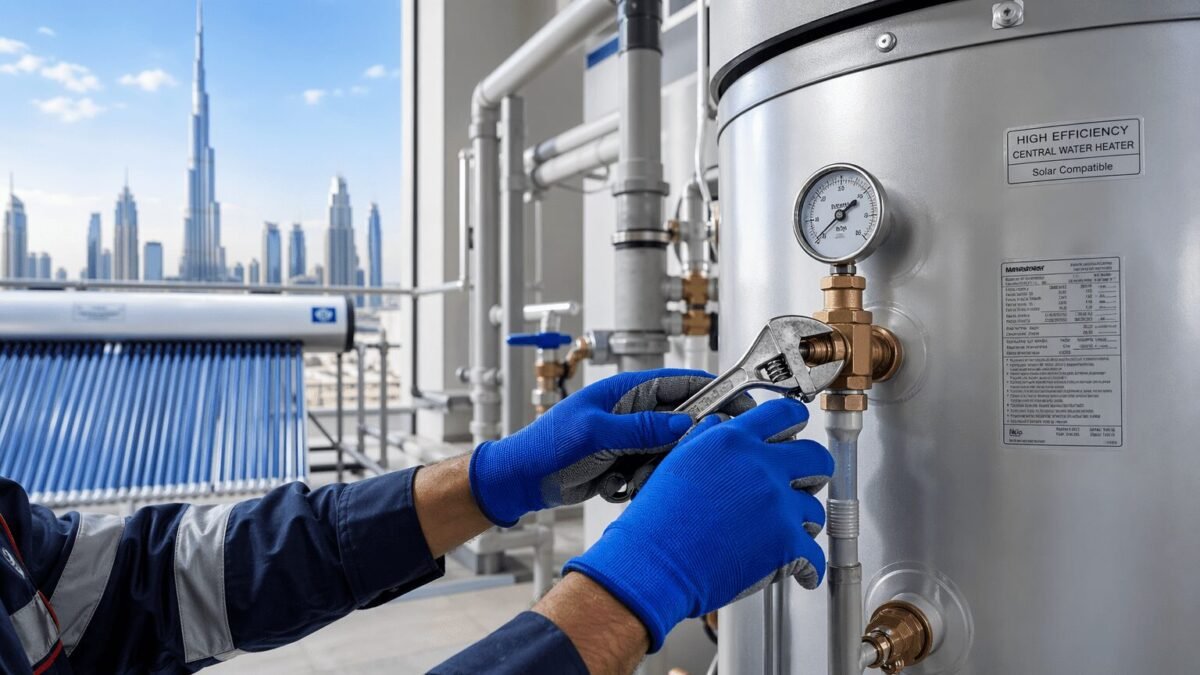
Monitor the expansion tank and pressure relief valves to ensure the system handles Dubai’s high ambient heat without bursting. Proper pressure management prevents internal stress on the copper coils. Regular checks help avoid the “hammering” noise often associated with air pockets in the lines.
Summary: Mastering these core essentials prevents minor mechanical glitches from escalating into systemic failures. For specialized technical support, contact EmirateFix Center at 0581781705.
Repair Costs and Service Timeline
Building on the technical essentials, understanding the financial and logistical aspects of maintenance helps in planning your household budget. Most common component failures in Dubai, such as faulty sensors or air-lock issues, are rectified within a single morning visit.
Component-Specific Restorations
Prioritizing targeted repairs for high-wear parts like thermostats or circulating pumps is more cost-effective than a full system overhaul. Modern diagnostic tools allow technicians to pinpoint electrical shorts in the backup heating element without dismantling the entire tank assembly.
Standardized Service Benchmarks
The following table outlines the typical investment required for common interventions and the expected downtime during the process:
| Service Type | Cost (AED) | Duration |
|---|---|---|
| System Diagnostic | 200, 350 | 1 Hour |
| Chemical Descaling | 400, 800 | 2, 3 Hours |
| Circulator Pump Fix | 600, 1,200 | 2 Hours |
| Valve & Pipe Sealing | 300, 600 | 1, 2 Hours |
Summary: Transparent pricing and rapid turnaround times ensure that your transition back to renewable energy is both affordable and seamless.
Expert Inspection and Performance Evaluation
While the costs above cover visible repairs, a professional evaluation uncovers hidden inefficiencies that a standard visual check might miss. Expert technicians from EmirateFix Center (0581781705) utilize thermal imaging to detect “cold spots” in the collector panels.
Advanced Optical Assessment
Professional audits analyze the transmittance of the glass and the integrity of the selective coating on the absorber plate. Addressing micro-cracks or “yellowing” of the glazing ensures that the maximum possible UV radiation is converted into thermal energy, even during hazy or overcast days.
System Calibration & Logic Testing
Fine-tuning the differential controller settings ensures the pump only runs when the collector is significantly hotter than the tank. This precision calibration can reduce auxiliary electricity consumption by up to 15%, ensuring your backup electric heater doesn’t kick in unnecessarily.
Summary: Data-driven evaluations transform a basic repair into a comprehensive performance upgrade, guaranteeing consistent water temperatures year-round.
Panel Cleaning and Descaling for Maximum Efficiency
Once the internal electronics and sensors are calibrated, the final step to peak performance involves optimizing the physical heat exchange surfaces. In the UAE’s arid climate, the accumulation of fine particulate matter and calcium carbonate is the primary cause of gradual heat loss.
Specialized Surface Decontamination
Removing the microscopic layer of “cemented” dust from the glass surface can improve solar gain significantly. Unlike standard window cleaning, professional solar rinsing uses deionized water to prevent streak marks that could otherwise refract sunlight away from the absorber.
Internal Heat Exchanger Flushing
Hard water in the region leads to “scaling” inside the tank’s heat exchange coils, acting as an unintended insulator. Professional descaling restores Ariston and other premium heaters to their original thermal conductivity. This protective measure prevents the internal heating elements from burning out due to localized overheating.
Summary: Meticulous external cleaning combined with internal descaling ensures your system operates at its theoretical maximum efficiency, significantly shortening your ROI period.
Support Structure and Leak Detection
Structural Integrity Audits
Beyond the mechanical components, the physical mounting hardware must withstand the constant thermal expansion and contraction cycles of the desert. Technicians inspect the racking systems and GRP panel tanks for stress fractures or loosened fasteners. For instance, securing the support frame prevents vibration damage that can eventually lead to hairline cracks in the collector glass.
Ultrasonic Leak Localization
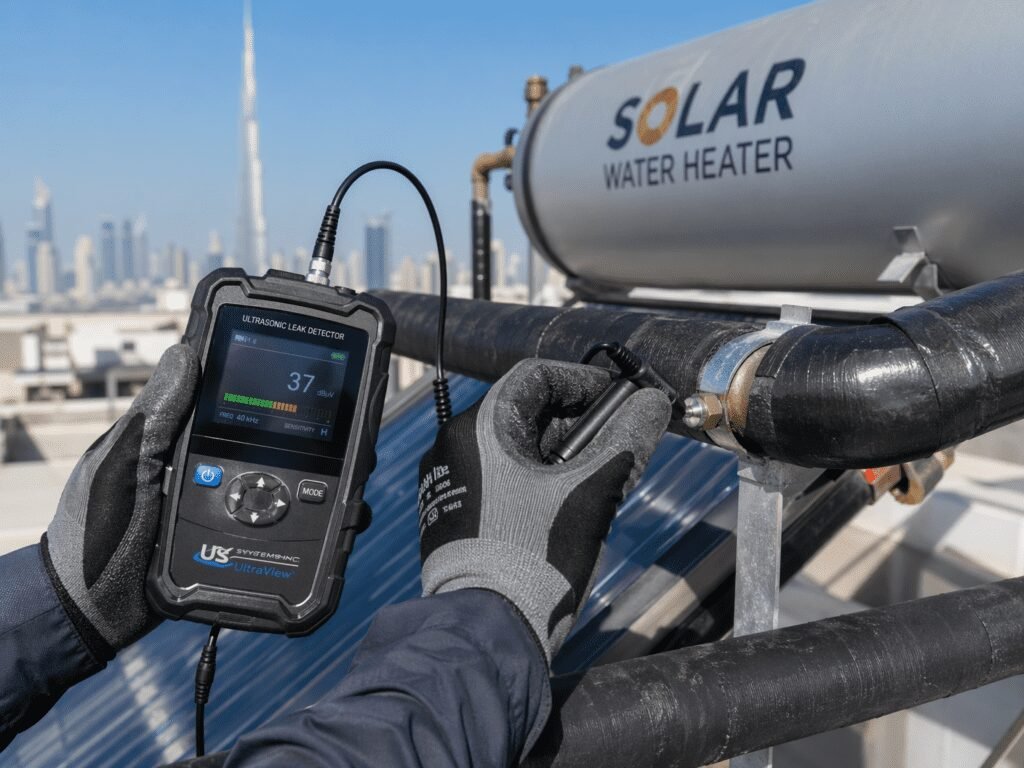
Modern detection involves identifying microscopic fissures in joints and manifolds before they become visible drips. Addressing these minor breaches early can reduce long-term restoration expenses by 40% compared to emergency flood repairs. Proactive monitoring ensures that the pressurized closed-loop system maintains the correct vacuum or fluid levels required for peak performance.
Summary of Solar Water Heater Repair
Optimizing a solar water heater in the UAE’s unique climate demands a holistic approach that balances mechanical pump health, structural stability, and surface cleanliness. By moving beyond reactive fixes and adopting a preventative diagnostic schedule, you secure consistent thermal performance while shielding your property from the risks of leaks or hardware failure. Professional oversight ensures that every component, from the smallest sensor to the heaviest storage tank, is tuned for the local environment.
Contact EmirateFix Center today for expert solar water heater repair in Dubai.
Phone: 0581781705
Email: info@emiratefix.com
Solar Collector Maintenance and Cleaning
Following the structural checks, the focus shifts to the thermal absorption surface. The efficiency of your collectors is directly tied to the clarity of the glass and the cleanliness of the internal fluid channels.
Professional Panel Cleaning
Optical Clarity: The removal of “cementing” dust and salt spray that hardens on the glass surface.
Benefit: Restores the solar transmittance rate, allowing the system to heat water up to 15°C faster than a neglected unit.
Example: Scheduling a deep-clean after a Shamal sandstorm ensures your system recovers its full heating potential immediately.
Specialized Descaling Services
Thermal Restoration: Using food-grade descaling agents to flush out calcium carbonate deposits from the collector’s copper risers.
Benefit: Eliminates “hot spots” in the panel that can lead to glass shattering under thermal stress.
Example: Residents using well-water for irrigation near their roof-mounts often require more frequent descaling to combat mineral-heavy mist accumulation.
Pump Repair and Controller Maintenance
While the collectors capture the heat, the circulation system is responsible for moving that energy into your home. A failure here rendered the most pristine panels useless, making pump health a priority for consistent water temperature.
Circulation Pump Diagnostics
Hydronic Flow: The mechanical movement of the heat-transfer fluid between the roof and the tank.
Benefit: Prevents stagnant water from boiling within the collectors, which can cause steam-hammer damage.
Example: Technicians use ultrasonic flow meters to detect impeller wear, allowing for a proactive swap before the pump seizes during a high-demand period.
Controller Logic Optimization
Digital Management: The “brain” that dictates when the pump should activate based on the temperature differential.
Benefit: Minimizes electricity consumption by ensuring the pump only runs when the solar gain is higher than the tank temperature.
Example: Whether servicing Ariston, SolarHart, or Honeywell controllers, experts recalibrate the “delta-T” settings to ensure zero energy waste during the winter months.
Summary: Synchronizing mechanical pump health with precise digital control prevents system stagnation and protects your investment from Dubai’s harsh thermal cycles.
Support Structure and Racking System Checks
Beyond the internal mechanics, the physical stability of your installation is paramount. In exposed communities like Arabian Ranches and Mudon, persistent high-velocity winds and extreme thermal expansion can cause mounting hardware to shift or loosen over time.
Structural Integrity
The foundation of a safe system. Engineering-grade inspections identify micro-fissures in mounting brackets before they compromise the collector’s angle. For example, verifying the torque on stainless steel bolts ensures the panels remain aerodynamic during seasonal sandstorms.
Roof Penetration Sealing
Protection against moisture ingress. Applying UV-resistant flashing and industrial-grade sealants prevents rainwater from seeping into your villa’s ceiling through the mounting points. This proactive measure avoids the need for expensive masonry repairs later.
Summary: Reinforcing the physical chassis of your solar array mitigates the risk of vibration-induced leaks and ensures the system remains securely anchored against Dubai’s unpredictable weather patterns.
Leak Detection and Pressure Relief Valve Inspection
While the racking system provides external stability, internal pressure management is what prevents catastrophic tank failure. Consistent monitoring of the hydraulic circuit is the only way to counteract the stress of Dubai’s high-ambient temperatures.
Ultrasonic Leak Detection
Identifying “invisible” pinhole leaks in insulated piping. Using acoustic sensors, technicians can locate internal drips that cause a 15% drop in thermal retention. For example, finding a hairline crack in a Jumeirah Park installation can prevent thousands of gallons of water waste annually.
Calibrating Temperature and Pressure (T&P) Valves
Ensuring the primary safety mechanism activates at the correct threshold. If a valve is seized by calcification, internal pressure can warp the inner tank lining. Regular testing ensures the spring-loaded mechanism releases excess steam safely.
Manifold Integrity Testing
Verifying the connection points where the collector meets the storage tank. In areas like The Springs, we focus on the rubber grommets and copper unions that often degrade due to high UV exposure, replacing them with high-temp silicone alternatives.
Summary: Precision leak detection and valve calibration act as a failsafe, protecting your property from flooding and ensuring the tank operates within its designed safety margins.
Frequently Asked Questions about Solar Repair in Dubai
Understanding the nuances of solar maintenance helps you identify issues before they require emergency intervention. Below are the most common queries we receive from residents in JVT and Mirdif.
Impact of Atmospheric Dust
How often should I schedule surface cleaning? In the UAE, fine particulate matter can form a “shading film” over the glass. While a 30% efficiency loss is common in neglected systems, a quarterly rinse with deionized water maintains maximum solar gain.
Identifying “Ghost” Leaks
Why is my water bill rising if I see no puddles? Often, a faulty pressure relief valve will bypass water directly into the drainage line. If you hear a constant hissing sound near the tank, the valve likely needs immediate replacement to stop the hidden water loss.
Hard Water Complications
Does the local water supply affect my heater? Yes, the high mineral content in Dubai’s municipal water can lead to calcium “plating” on the heating element. We recommend an annual flush of the storage tank to remove sediment that acts as an insulator against heat transfer.
Summary: Proactive cleaning, monitoring for silent leaks, and managing sediment levels are the three pillars of maximizing your solar water heater’s ROI and performance.